


Journal · Ingredients
What is kokum butter?
Most Indian families know kokum from the kitchen. Here is what it is, how the butter is made, and why it behaves the way it does on dry skin.
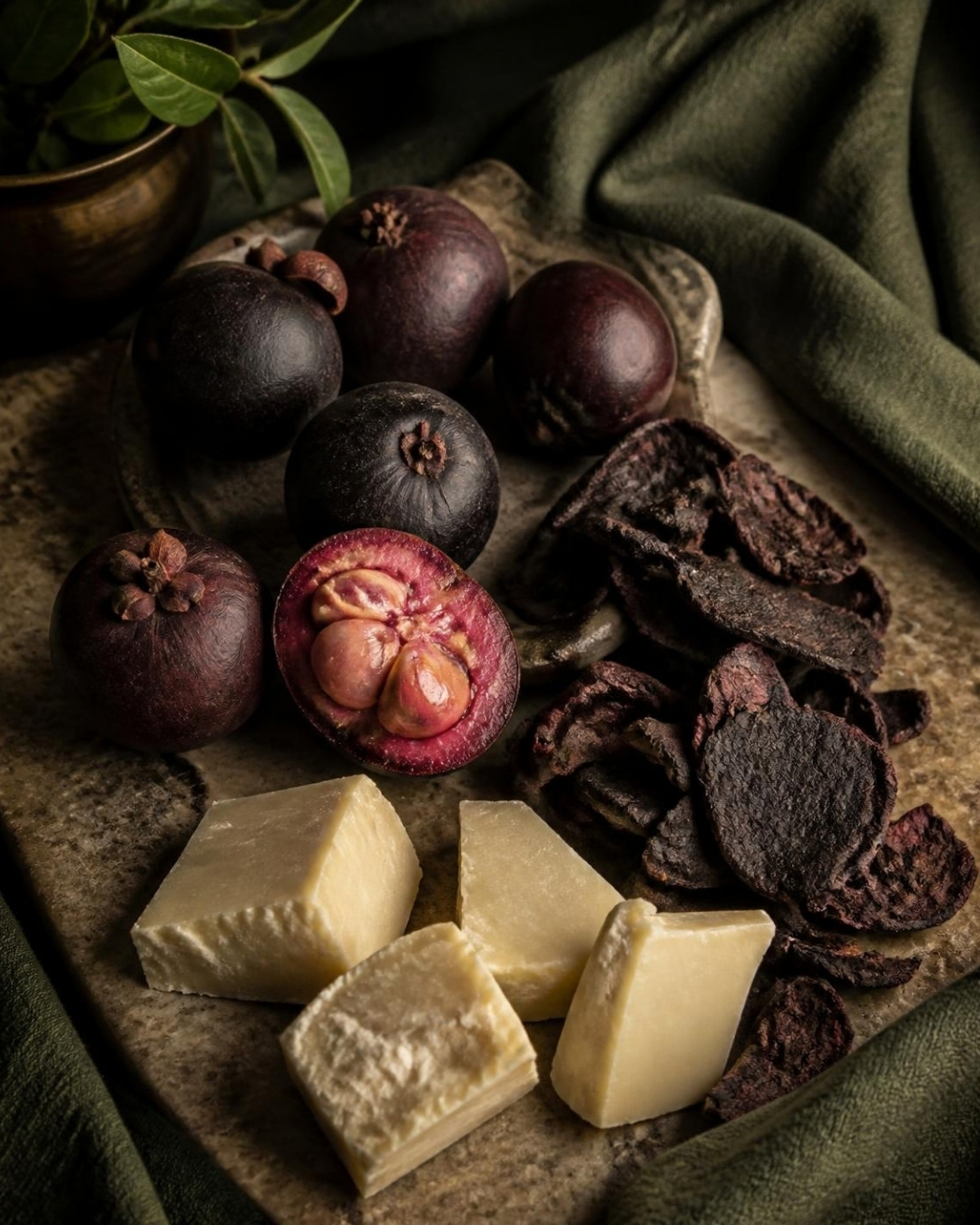
If you grew up in Maharashtra, like the three of us did, you probably met kokum long before you knew it could go on your skin. It was the pink sol kadhi after a heavy lunch, the sweet kokum sherbet in summer, and the dried, dark rinds your mother dropped into a curry instead of tamarind.
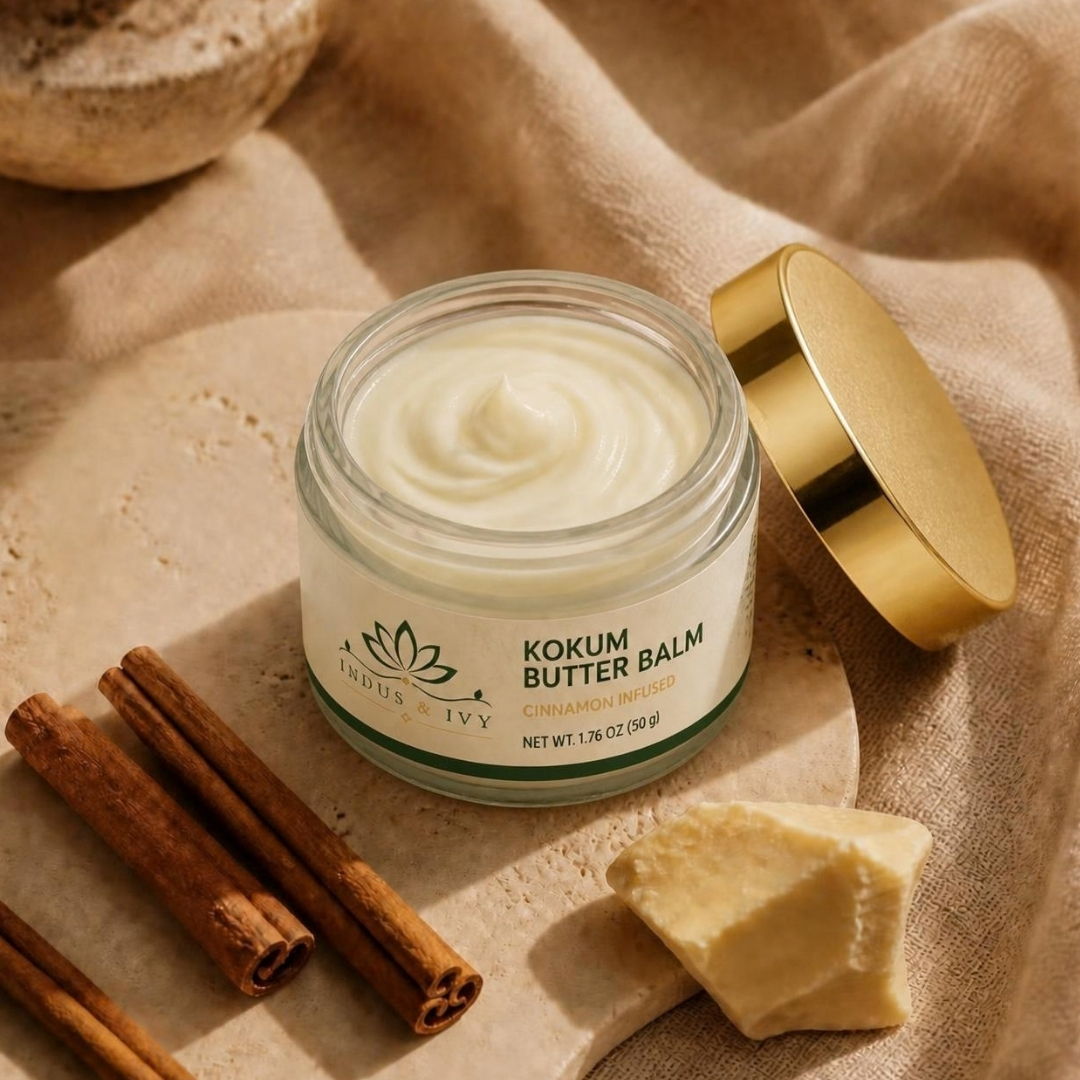
The same fruit gives us kokum butter. It's the hero of our first product, so we wanted to explain exactly what it is, without the hype.
Where kokum comes from
Kokum is the fruit of Garcinia indica, an evergreen tree native to the forests of the Western Ghats in India, across Maharashtra, Goa, Karnataka and Kerala. The fruit is small and round, deep red to purple when ripe, and it's usually harvested in April and May.
Almost every part of it gets used. The rind is sun-dried to make amsul, a souring agent. The fresh fruit is cooked with sugar into the bright red syrup that becomes kokum sherbet. And inside the fruit are the seeds, which hold the butter.
From seed to butter
Kokum seeds contain roughly a quarter of their weight in fat. After harvest, the seeds are separated from the fruit and dried, and the fat is then extracted and refined into a pale, firm butter.
One thing we want to be clear about: our kokum butter isn't cold-pressed. Our supplier uses a process suited to extracting the solid fat from kokum seeds, which is what gives it its firm texture. We'd rather tell you that than let a label imply otherwise.
Why it behaves the way it does
Every plant butter is a mix of fatty acids, and the mix decides how it looks and feels. Kokum butter is mostly two:
- Stearic acid, about 55 to 65%. A saturated fat that keeps the butter firm at room temperature.
- Oleic acid, about 30 to 44%. An unsaturated fat that gives it slip as it softens.
That high stearic content is why kokum butter is one of the firmest plant butters. Formulators describe it as harder than shea or mango butter, and inclined to crumble rather than snap.
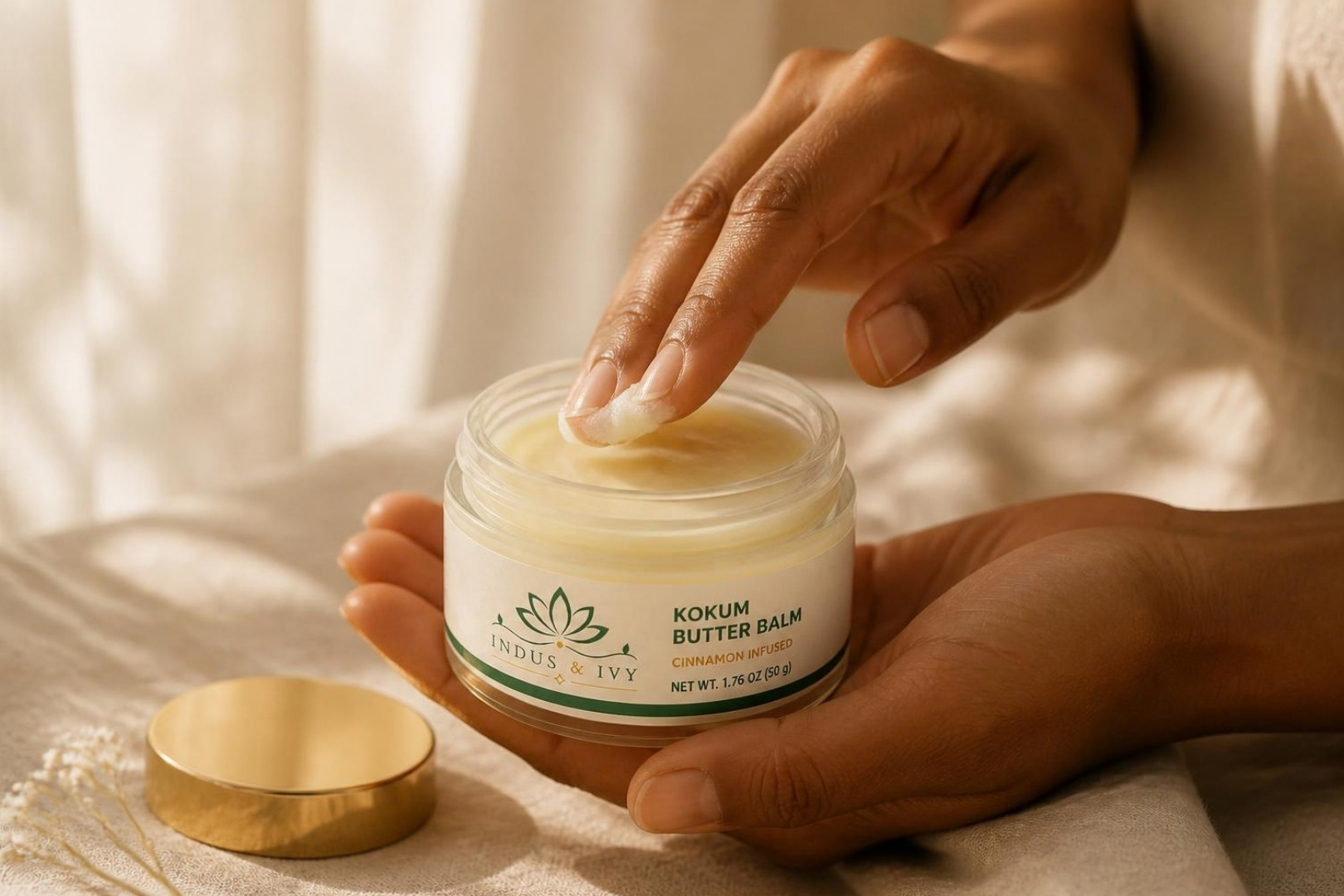
The useful part is where it melts. Kokum butter starts to melt at around 34 to 40°C, which is close to the temperature of your skin. So it sits solid in a jar, then softens the moment you rub it between your fingers.
Solid in the jar. Soft the moment it meets warm skin.
What it does for dry skin
Kokum butter is an emollient. It softens and conditions dry, rough skin and helps it feel smoother. Formulators often note that it feels less greasy than many other butters, which matters on feet you're about to put socks on.
That's the honest list. It isn't a medicine, and it won't fix every cracked heel on its own. If your heels are bleeding, very painful, or you have diabetes, please see a doctor before reaching for any balm.
Why we built our first product around it
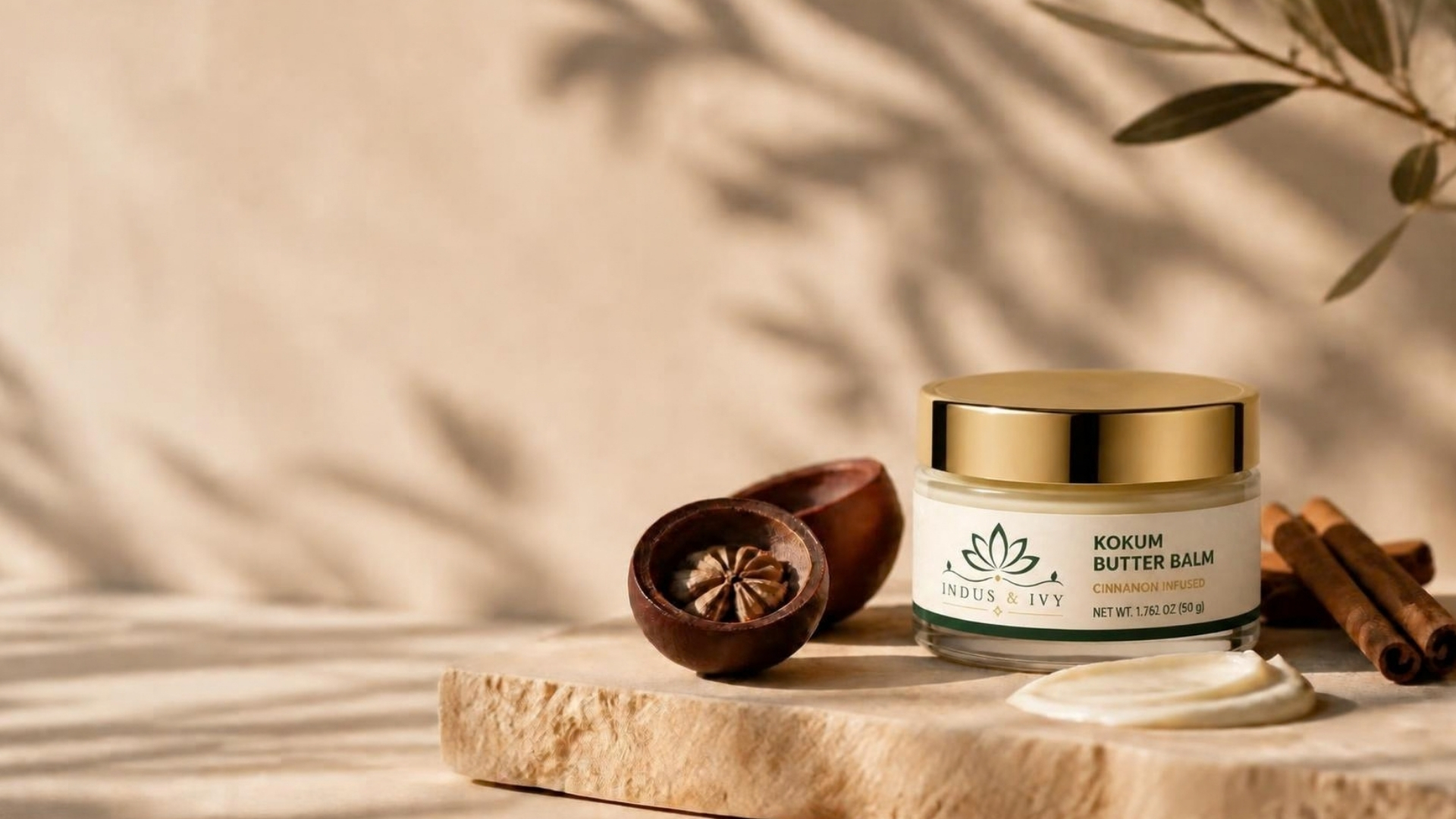
Part of it is personal: kokum is something we grew up with, and we were tired of not finding it here. Part of it is practical. A firm butter that softens at skin temperature is a good base for a balm that has to stay on a heel overnight. We paired it with a light rice bran oil so it spreads easily, beeswax so it holds its shape, and a little cinnamon leaf oil for warmth.
Four ingredients in total. You can see every one, and why it's there, on the product page.
Sources
- Kokum butter: fatty acid composition and melting point
- Garcinia indica: native range, culinary uses, seed fat content
- Humblebee & Me: kokum butter texture and skin feel
This article is general information, not medical advice. If you have a skin condition, diabetes or concerns about your feet, please talk to a doctor.