


Journal · Rituals
A night routine for dry, cracked heels
A simple routine you can do before bed, built on what dermatologists recommend. It works with any rich balm, ours included.
Dry, cracked heels are one of those things almost everyone deals with at some point. Standing all day, open-back shoes, hot showers and dry winters all make it worse. The good news is that a few minutes before bed, done consistently, goes a long way.
We're not dermatologists, so we built this routine on guidance from the American Academy of Dermatology and Mayo Clinic. Links to both are at the bottom.
1. Keep the soak short and warm
A short soak in warm water, around 10 minutes, softens the skin and makes the next steps easier. Don't make it long or hot. Long, hot water strips the natural oils your skin needs. If you'd rather do this in the shower, keep it to 5 to 10 minutes and use a gentle, fragrance-free cleanser.
2. Exfoliate gently
While the skin is soft, use a loofah or foot scrubber to gently buff away loose, dry skin. Gentle is the key word. Don't scrub hard, and never cut or shave thick skin yourself.
3. Moisturize while skin is still damp
Pat your feet dry with a towel instead of rubbing, then moisturize within about five minutes, while the skin is still slightly damp. This helps hold in the water your skin just absorbed.
4. Seal it with something rich
This is where a thick, oil-based product matters. Both the AAD and Mayo Clinic suggest a heavy, oil-based cream or plain petroleum jelly at night. The idea is a layer that stays on the skin instead of evaporating like a light lotion.
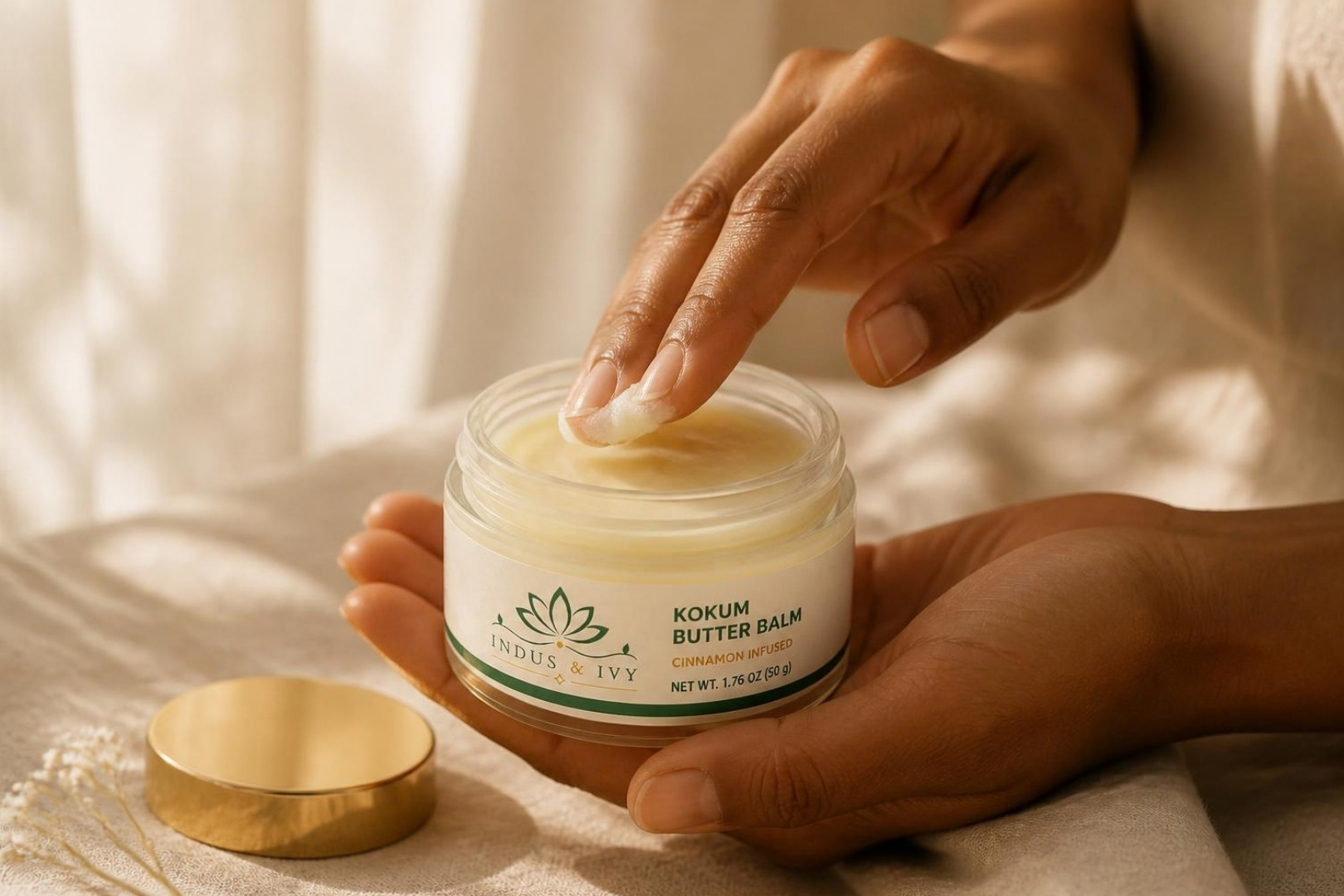
That's exactly the job we designed our Kokum Butter Balm for: warm a small amount between your fingers, then massage it into your heels with slow, firm strokes. But any rich balm will do this job. The routine is what matters most.
The most important ingredient is doing it every night.
5. Put on cotton socks
Socks keep the balm on your heels instead of your sheets, and they help it stay in contact with the skin overnight.
During the day
- Skip open-back shoes like flip-flops and slingbacks while your heels recover. Worn-down or badly fitting shoes also add pressure.
- Moisturize again in the morning if your skin feels tight.
Ingredients dermatologists also mention
For thick, rough skin, the AAD also points to creams with urea (10 to 25%), alpha hydroxy acids or salicylic acid. Our balm doesn't contain these. It's a simple butter-and-oil balm. If your skin is very thick, it's worth asking a pharmacist or dermatologist whether one of those would help. They can sting on cracked skin, so start gently.
When to see a doctor
Please talk to a doctor or dermatologist if:
- your cracks are deep, bleeding or very painful,
- you see signs of infection, like redness, warmth or swelling,
- you have diabetes or poor circulation, or
- nothing improves after a few weeks of consistent care.
Dry heels are common, but they can also be a sign of something else. It's always fine to get them checked.
Sources
- American Academy of Dermatology: How to care for dry, cracked heels
- Mayo Clinic: Cracked heels, what helps?
- American Academy of Dermatology: Skin care for people with diabetes
This article is general information, not medical advice. If you have a skin condition, diabetes or concerns about your feet, please talk to a doctor.