


Journal · Ingredients
Kokum butter vs. shea butter for dry feet
Shea is the butter most people know. Kokum is the one we grew up with. Here is how they actually differ, and why we chose kokum for our balm.
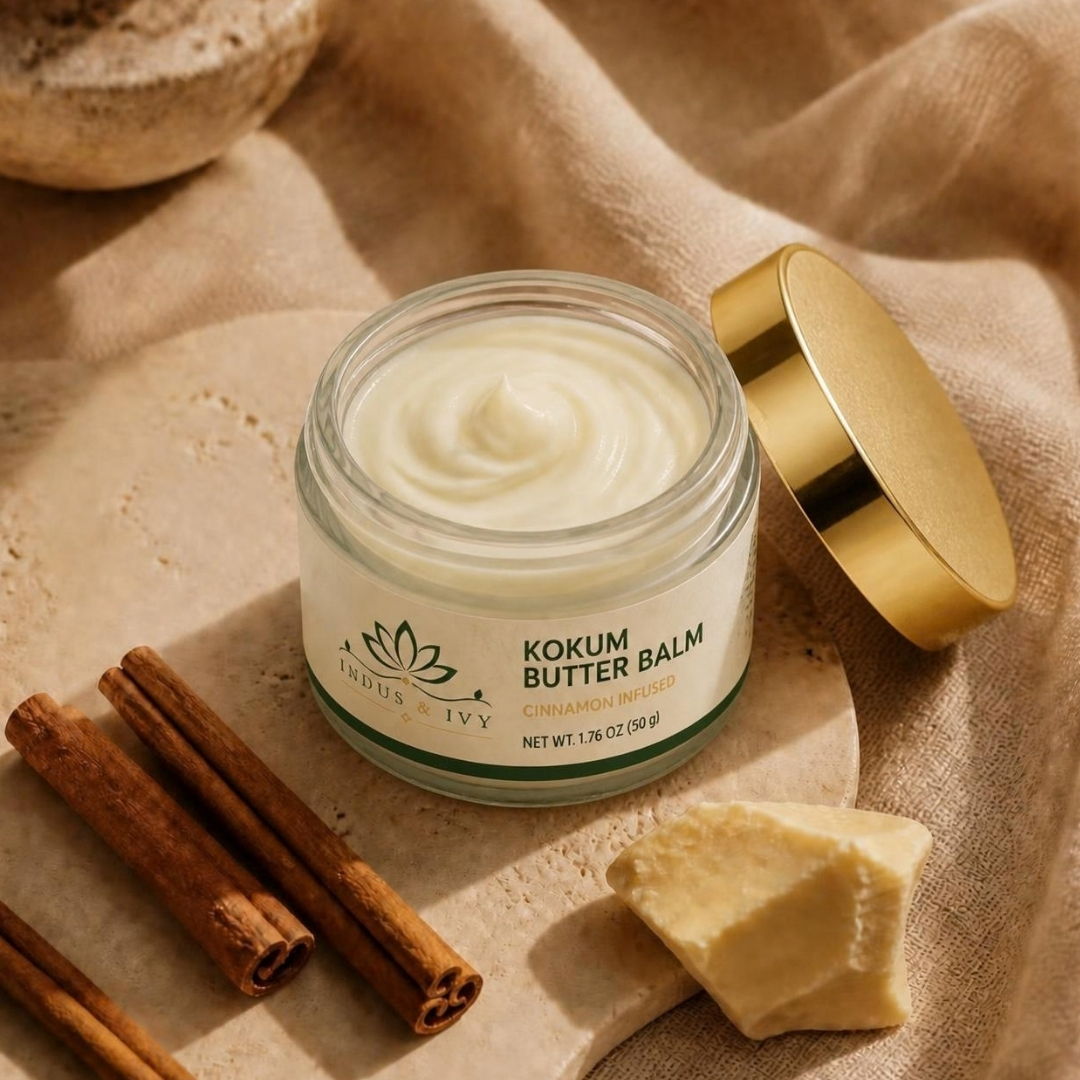
Walk down any body care aisle in the US and you'll see shea butter everywhere. Kokum butter is much harder to find. People sometimes ask us whether kokum is "better." The honest answer is that they're different, and the difference shows up in how they feel.
Where they come from
Shea butter comes from the nuts of the shea tree, Vitellaria paradoxa, which grows across the savanna belt of Africa. Most shea in stores is West African; there's also a softer East African variety, often called shea nilotica.
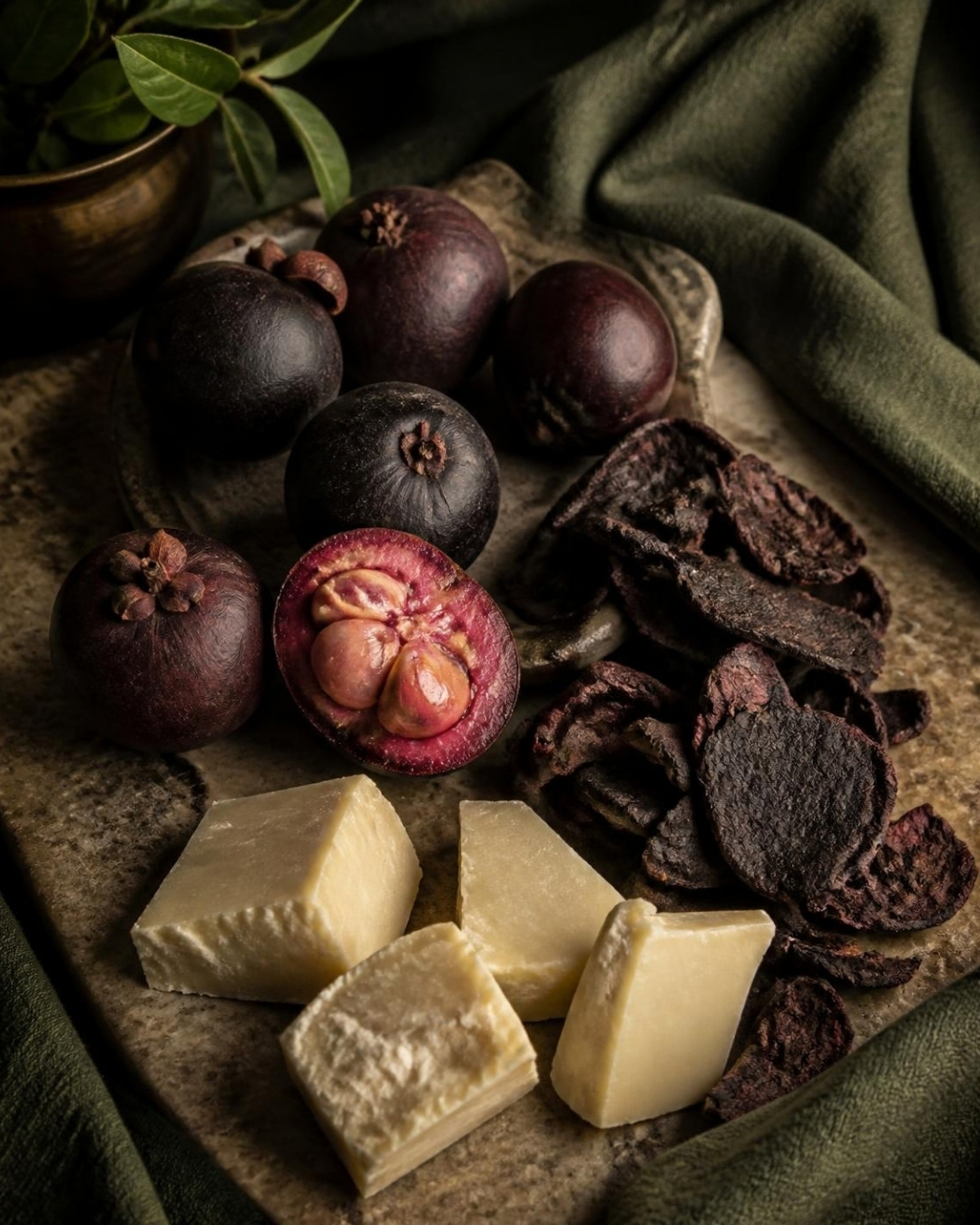
Kokum butter comes from the seeds of the kokum fruit, Garcinia indica, a tree native to the Western Ghats in India. You can read more in What is kokum butter?
Side by side
| Kokum butter | Shea butter (West African) | |
|---|---|---|
| Main fatty acids | Stearic 55–65%, oleic 30–44% | Oleic 40–55%, stearic 35–48% |
| At room temperature | Very firm, can crumble | Softer and creamier |
| Starts to melt | About 34–40°C | About 35–42°C |
| Skin feel | Often described as light and less greasy | Rich and cushiony |
The short version: kokum has more stearic acid, so it's firmer. Shea has more oleic acid, so it's softer. East African shea has even more oleic acid and melts at a much lower temperature, which is why it feels almost like a whipped cream.
What that means for dry feet
Both butters are emollients. Both soften and condition dry skin. We haven't seen good research showing that one does a better job on heels than the other, so we won't claim that it does.
Where you'll notice a difference is in texture and feel:
- If you like a rich, cushiony layer, shea tends to feel more substantial on the skin.
- If you want something that softens on contact but doesn't leave a heavy film, kokum is worth trying. It's a popular choice in balms for exactly this reason.
- If you're making a solid balm that has to stay put, kokum's firmness helps it hold its shape in the jar and on the skin.
Different butters, different feel. Neither one is magic.
Why we chose kokum
We'll be upfront: part of the reason is that kokum is ours. It's an ingredient we grew up around, and very few brands in the US use it as the hero.
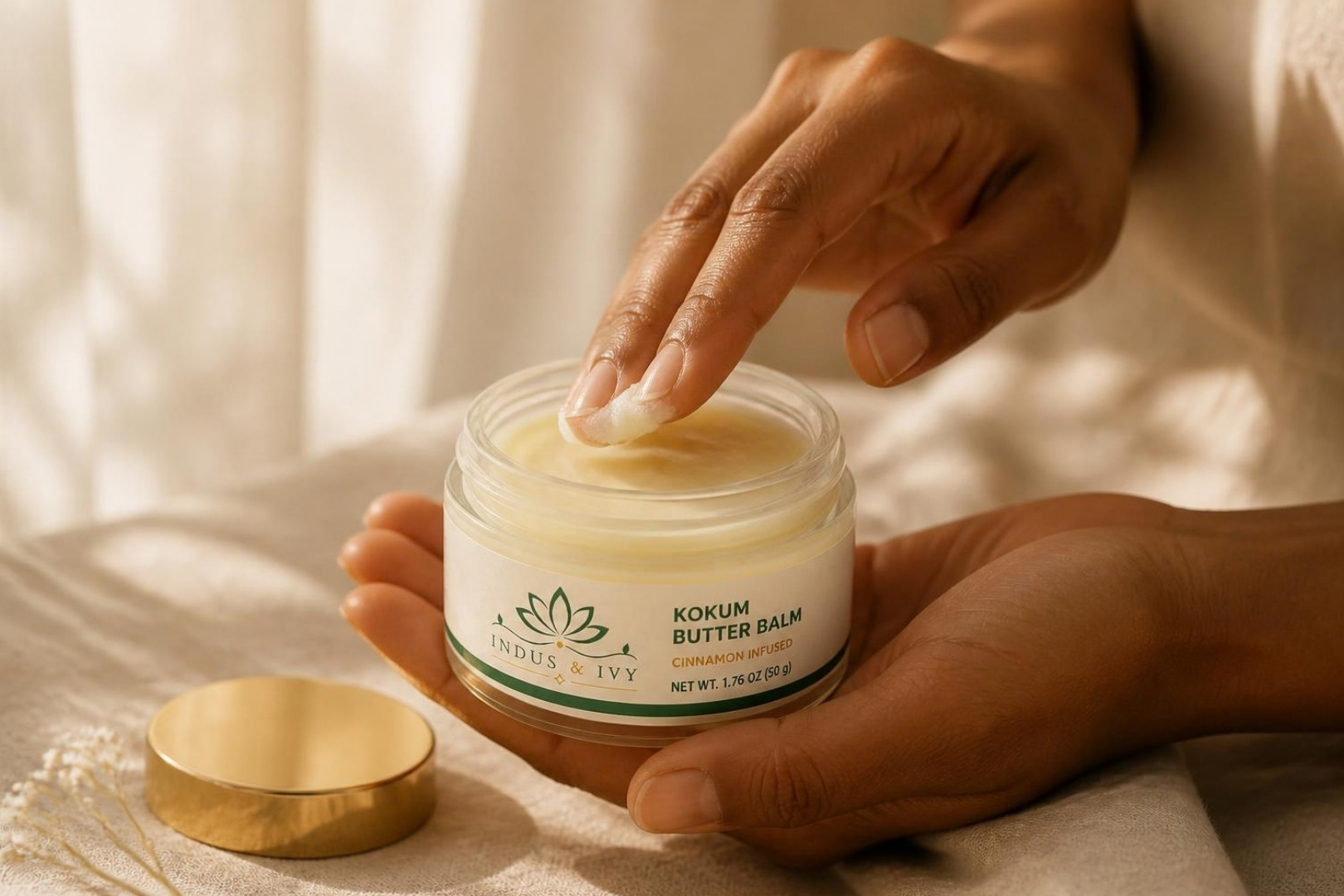
The other part is the texture. We wanted a balm that's firm in the jar, softens as you warm it between your fingers, and doesn't feel slick under socks. Kokum does that well, especially paired with a light oil like rice bran oil.
If you already love shea, you don't need to switch. If you're curious what all of this feels like in practice, that's what we made the balm for.
Sources
- Kokum butter: fatty acid composition and melting point
- Shea butter (West and East African): fatty acids, melting point, texture
- Humblebee & Me: kokum butter compared with shea and mango butters
This article is general information, not medical advice. If you have a skin condition, diabetes or concerns about your feet, please talk to a doctor.